Moving Away from Words
Teaching Through Form in Moving Away
Context
A game jam called My First Game Jam, July 2020. Theme: Change. Fourteen days, solo, Game Maker Studio 2 — an engine I was still learning.
Moving Away is a puzzle-platformer about Anahí, a girl from a tribal world who undertakes a journey to find the Sacred Spirit of the Bird and save her people from displacement. The theme landed immediately: Change became the mechanic and the narrative at the same time. Anahí transforms into a bird to traverse the world — shape-change as the core ability, forced change as the story. The two weren't separate decisions. They were the same decision.
What I didn't plan was the design problem the setting would create.
The Constraint
Besides not being a visual artist, I was learning a new engine.
I couldn't figure out how to render text properly in Game Maker Studio 2.
That's it. Not a philosophical decision about wordless storytelling, not a deliberate aesthetic choice derived from the tribal setting. A technical wall.
The game had nine tutorial stages. Players needed to learn movement, double jump, Bird Form, energy management, lock-and-key mechanics, and blinking platforms — in roughly that order. All of it had to be communicated without a single word on screen.
The constraint forced the question: what does a world that doesn't use written language actually look like when it needs to teach something?
The UI Solution
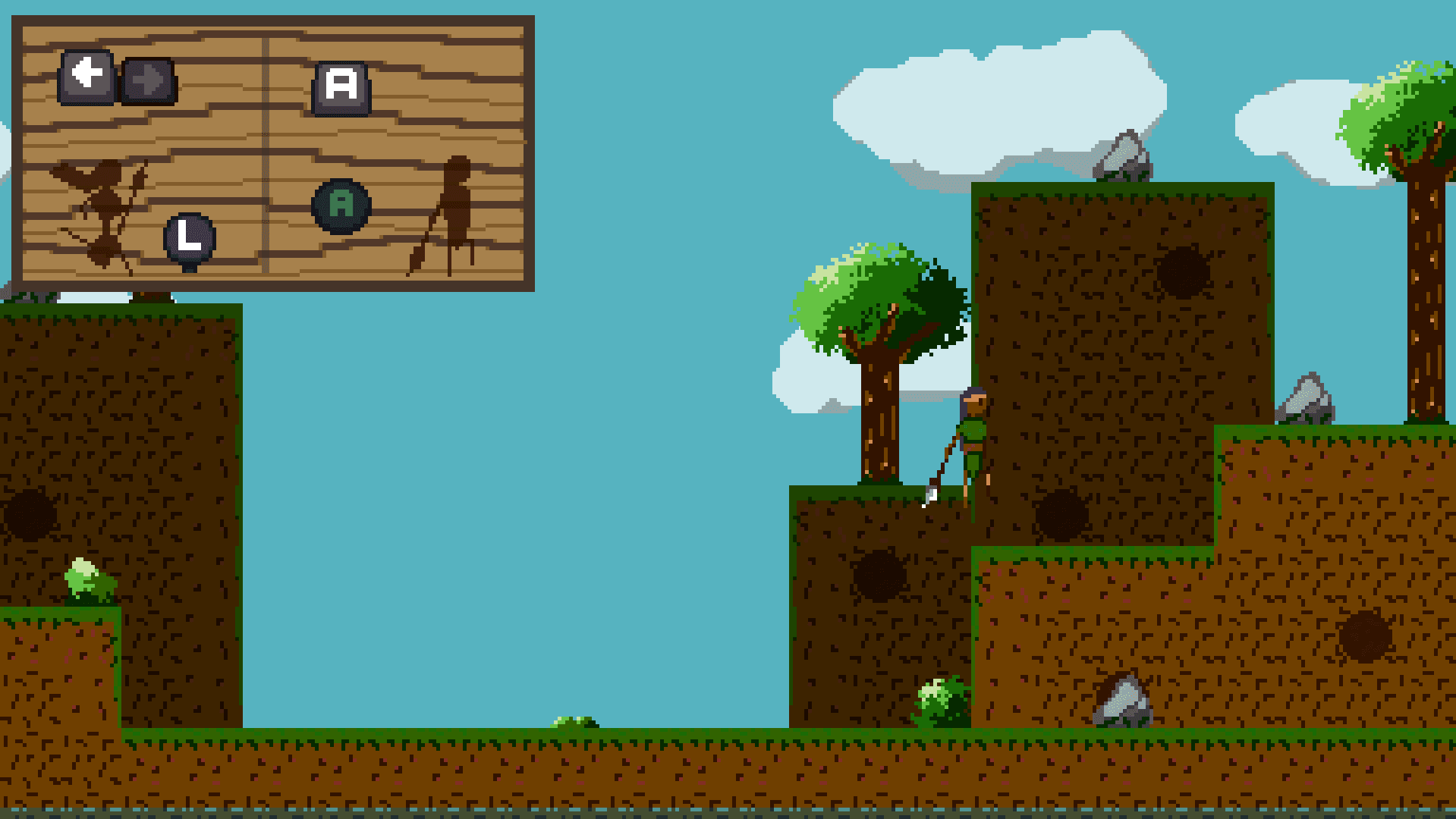
The first problem was button prompts. Players needed to know which button triggered which action — standard tutorial information, normally handled with a line of text next to an icon.
The solution was to pair each button icon with the character's animation for that action. The button appears on screen. Next to it, Anahí performs the move. The player sees what to press and sees what will happen simultaneously — no caption required.
This ended up being more coherent with the world than text would have been. A tribal setting communicates through demonstration, not instruction. The UI wasn't translating information into words — it was showing it directly. The limitation produced a system that fit the game's identity better than the intended solution would have.
Graph UI for input, and basic level design to practice.
The Level Design Layer
UI handled the input layer. The level design had to handle everything else.
The approach was a strict teach-test structure across nine stages, each introducing one mechanic before asking the player to use it under pressure.
The first two rooms establish movement and jump, with open geometry that gives players space to experiment without consequence. The second room removes that space and applies a small challenge — the first real test of what was just taught. Failure restarts the room. Short iteration cycles kept the cost of failure low and the feedback loop tight.
Double jump followed the same pattern: introduce the mechanic, give room to practice, then demand it in a context where failure is possible but not punishing.
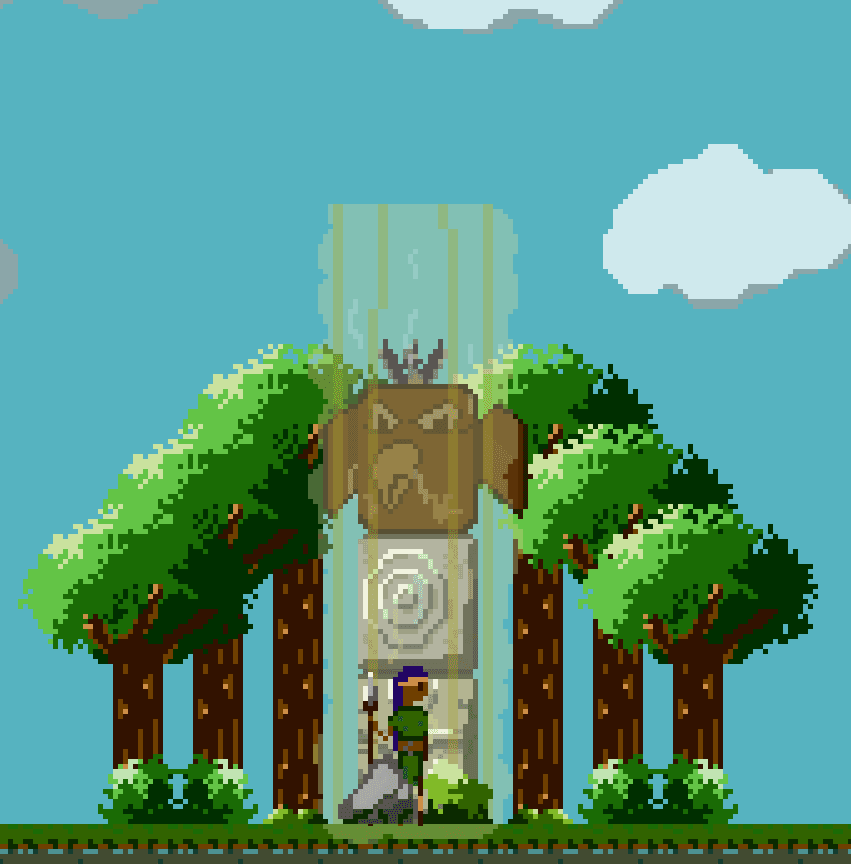
The Bird Form stage broke from the pattern deliberately. Stage 6 is slower and more open — a room built for narrative atmosphere, not mechanical challenge. The player receives the transformation ability here. The shift in geometry communicated the shift in tone: this moment is different from what came before.
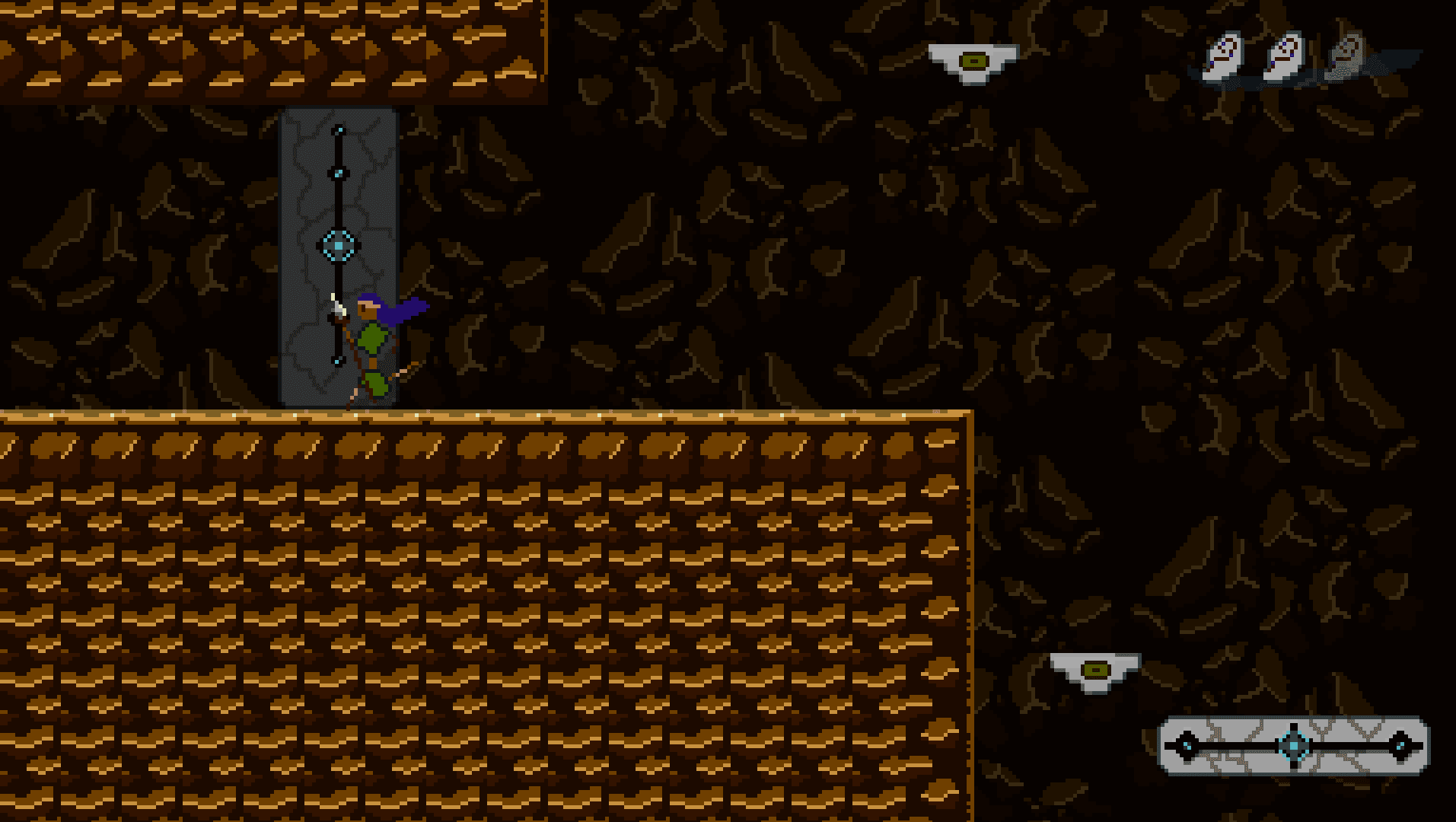
By stage 8, the player knows all the core mechanics. The room introduces multiple valid paths through the same space — showing that the game's systems support more than one solution. A secret feather is placed off the critical path, visible only to players who explore — and it isn't decorative. Feathers grant energy for the Bird Form, meaning the player who takes the time to look around gains mechanical capacity, not just a completion counter. Stage 9 adds blinking platforms and a lock-and-key mechanic, where the door becomes visible to the player the moment they approach the key — proximity reveals consequence without a single word of instruction.
The final room combines everything: three keys to find, two hidden feathers for explorers, a door that requires all three keys to open. It's a test of the full system, designed to feel earned.
Unlocking the bird shape. I'm proud I made the controller rumble on this.
Thematically Consistent
The jam theme was Change. I applied it twice.
Mechanically, the Bird Form is literal transformation — the player changes shape to solve problems the human form can't. Narratively, the story is about change being imposed from outside: Anahí's people are being pushed off their land. The player's agency over change (I choose when to transform) sits against the story's lack of it (her people have no choice).
That resonance wasn't planned in advance. It came from taking the theme seriously as a design constraint, not just a label to attach to the submission.
Door opening on the last stage.
What Shipped
Moving Away shipped for My First Game Jam with nine tutorial stages, one full challenge level, controller support, and an original tribal-influenced soundtrack. The design document — written to help beginners understand the decisions behind the game — was included as a free download.
The player communication system worked. Reviewers commented on the visuals and the mechanics; nobody flagged confusion about what the controls were or what the game was asking them to do. A system that started as a workaround for a technical limitation became the game's most consistent design decision — coherent with its world, legible to its players, and never relying on the words I didn't know how to put on screen.
Moving Away — Solo Developer — My First Game Jam · 2020
The game, and pdf material, can be downloaded at gkorn.itch.io/moving-away
You can also find the document here.